Multimodal neuroimaging
MEG source work in autism and connectivity analysis
Acquired and preprocessed MEG on an Elekta/Neuromag Vectorview system, generated Fast-VESTAL source maps, and created MEG-derived ROIs for downstream fMRI interpretation.
Neural signals become useful when the measurement, the analysis, and the human context hold together.
Multimodal neuroimaging
Acquired and preprocessed MEG on an Elekta/Neuromag Vectorview system, generated Fast-VESTAL source maps, and created MEG-derived ROIs for downstream fMRI interpretation.
Cerebellar fMRI
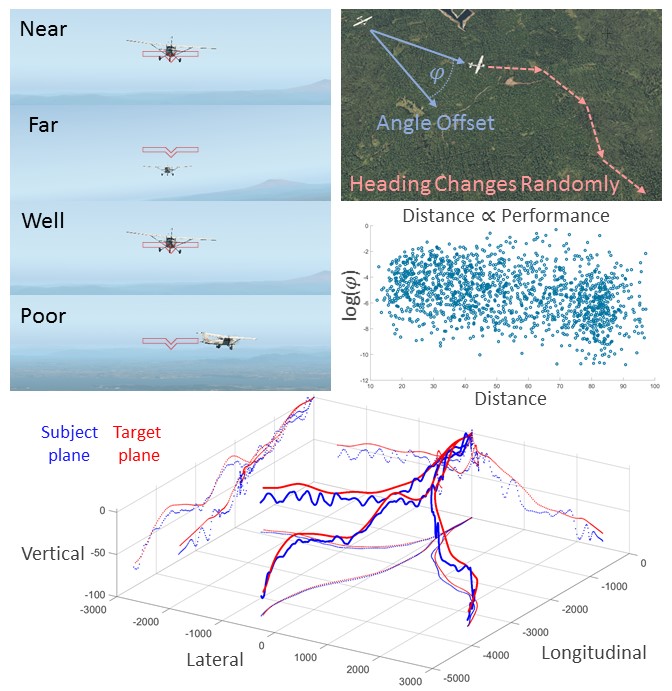
Designed the X-Plane task, wrote control software, and led the full fMRI pipeline for the first-author study on cerebellum, basal ganglia, and cortex.
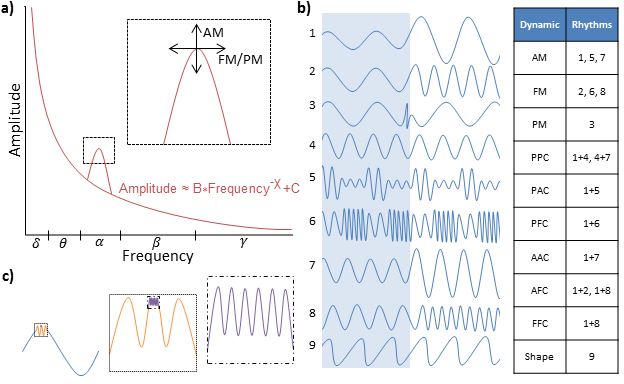
Neural signal dynamics
Compared high-resolution spectral estimators for detecting sub-Hz changes in peak frequency quickly enough to support real-time neurofeedback. The work tested FFT, Welch, Burg, spectral-envelope, MUSIC, and eSPRIT methods under low-SNR and 1/f-noise conditions; spectral-envelope and Welch methods were promising in filtered-noise cases.
fNIRS methods
Open-source, cross-platform, client-side fNIRS analysis that runs in any modern browser, including offline. The app exports a transportable processing and analysis protocol: an ordered, human- and machine-readable record of preprocessing and modeling choices with parameters and provenance, reloadable to resume work and retrace decisions without data sharing.
Clinical technology
Clinical analytics and patient-resource applications developed in a stack that includes Node.js, Vue 3, Tailwind, Google Apps Script, and Google Cloud.
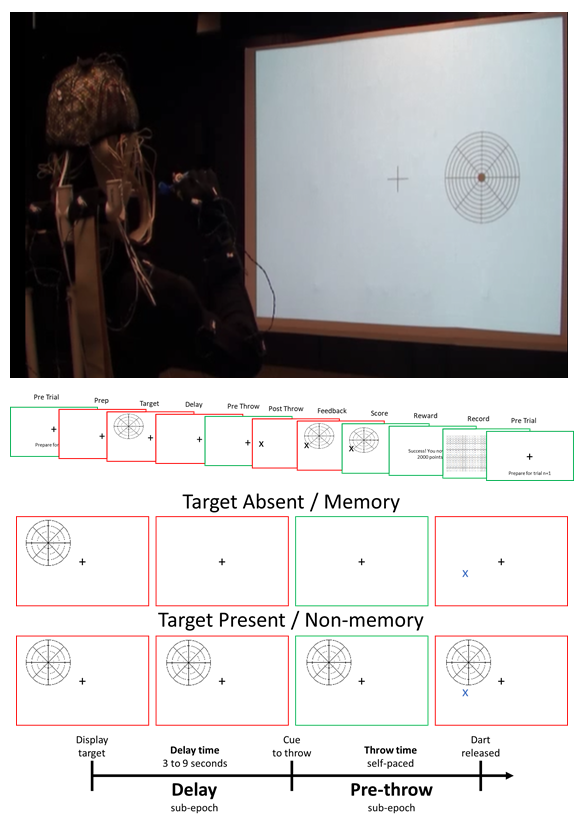
Three views of the research arc: oscillatory dynamics, continuous aviation behavior, and full-body working memory.
Early work at NASA connected physiological measurement to adaptive systems, emergency response, and human performance.
2013 | NASA Jet Propulsion Laboratory
Designed and field-tested a reproducible, low-cost mobile photoplethysmograph synchronized by microcontroller to provide ground-truth cardiac data for JPL's FINDER radar life-detection system in search-and-rescue settings.
2008 | NASA Langley Research Center
Developed and tested an EEG neurofeedback interface for attention and engagement, an early applied-sensing project connecting human signals to adaptive learning environments.
Publications and talks
First-author paper bridging ecological task design, cerebellar fMRI, and performance under time pressure.
Compared spectral methods for detecting sub-Hz peak-frequency changes under low-SNR and 1/f-noise conditions.
Direct conventional MEG acquisition, preprocessing, and source-level interpretation supporting a multimodal analysis pipeline.
Software and methods work focused on local-first analysis, protocol portability, and reproducible processing.
Ecological task design and neuroergonomics work from the aviation pursuit study.
Measurement, analysis, software, and translation stay connected across the work.
Manuscripts in development
Full-body EEG and motion-capture study of preparation, delay, and throwing periods; substantial revision remains before submission.